
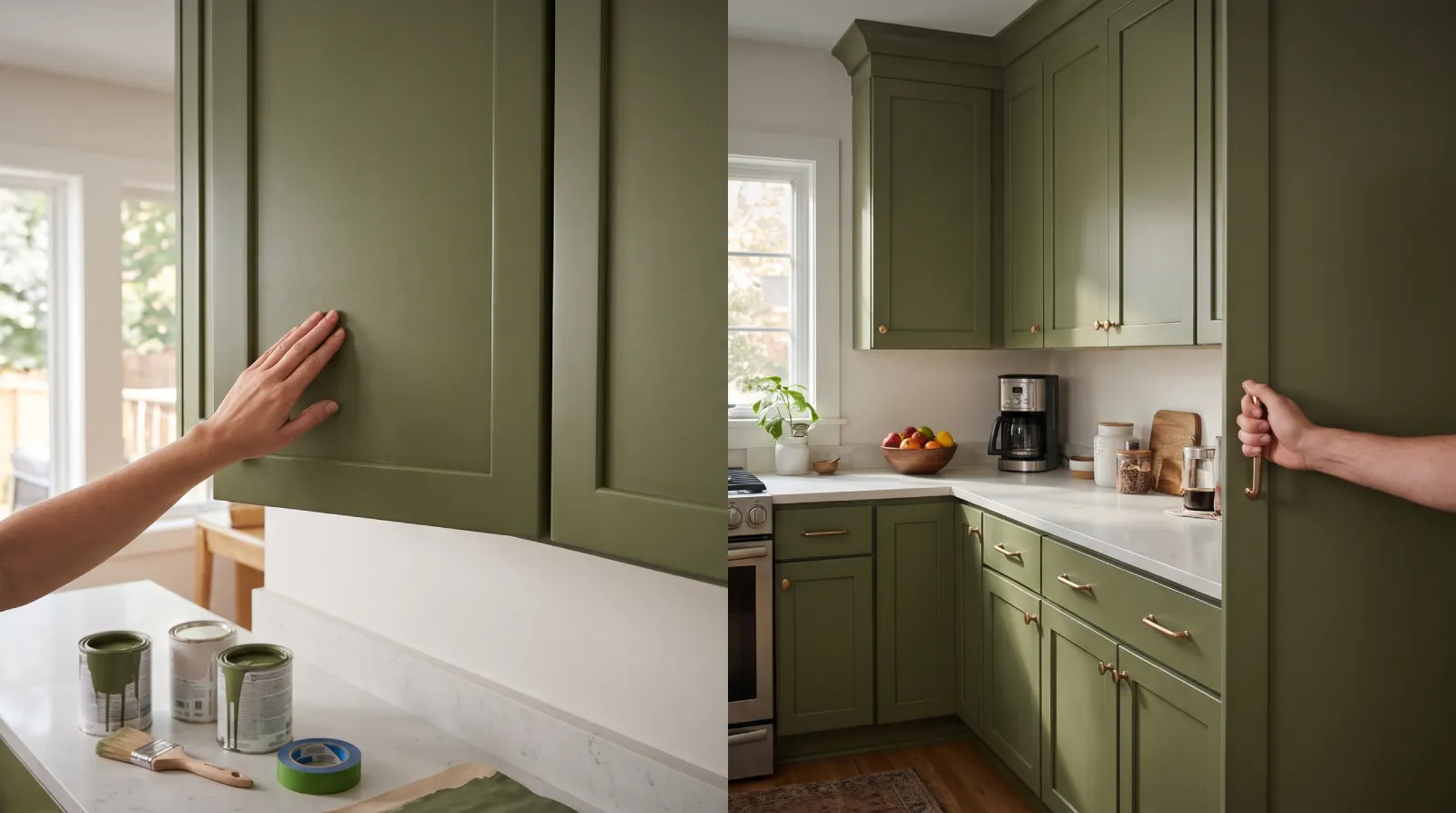
Cabinet paint cure time depends on the coating system, application, and conditions specified by the manufacturer. Paint that feels dry is not necessarily ready for normal cleaning, repeated contact, or items being pressed against it.
The practical answer should come from the actual products used on your project and the refinisher’s written aftercare instructions. A general internet timeline cannot replace that information.
For Central Kentucky homeowners planning cabinet refinishing, the useful question is not simply when the final coat will be applied. Ask when the different parts of the kitchen can return to use and what handling precautions belong to each stage. A clear plan helps you organize meals, hardware, storage, and cleaning without treating every “dry” surface as fully ready.
Distinguish Drying From Curing
Drying describes a stage in the coating’s development, but product instructions may identify several milestones. A surface may be dry to touch before it is ready for recoating, handling, assembly, or service.
Curing concerns the development of the coating’s intended properties over the period and conditions described for that product. Different coating technologies do not necessarily follow the same timetable.
Read the terminology used by the manufacturer. “Recoat,” “handle,” and “return to service” should not be interpreted as identical instructions.
Ask the painter to translate the relevant milestones into household actions. You need to know what they mean for opening a door, replacing a drawer, putting dishes away, or cleaning a spill. Those actions are more useful planning references than one isolated number.
Identify the Actual Coating System
Cabinet refinishing can involve preparation products, primer, finish coats, and other materials selected for the substrate and project. The schedule should reflect the system, not a generic reference to cabinet paint.
Ask for the product names and the aftercare information relevant to the finished surfaces. If several areas use different coatings, confirm whether their instructions differ.
A manufacturer’s cabinet-painting guidance illustrates why instructions are tied to a particular project and product choice. Do not copy a timeline from one manufacturer’s example and assume it applies to every professionally refinished kitchen.
Keep the product information with the project record. It can help the painter answer a later question about cleaning, touch-ups, or an unexpected mark without having to reconstruct what was used.
Ask How Conditions Affect the Schedule
Product instructions commonly specify conditions under which application and drying information apply. Temperature, humidity, ventilation, and the way the coating was applied can affect the project.
Discuss actual conditions in your home and any separate finishing location. A door finished in one environment may then be transported and installed in another.
Do not assume that a warm room automatically creates an approved shortcut. Uncontrolled heat, aggressive airflow, or a household appliance aimed at the surface can introduce other problems.
The refinisher should explain how the work will be scheduled around the coating’s requirements. If conditions differ from those assumed in the technical information, ask how that affects the handling and return-to-use plan rather than expecting the original calendar to remain unchanged.
Separate Installation Day From Normal Use
The day doors and drawers are returned is an important milestone, but it may not mean that every surface can immediately receive ordinary household wear.
Ask which actions are permitted and which should wait. That includes reinstalling accessories, placing items on painted shelves, attaching organizers, and using cleaning products.
A hypothetical kitchen might have refinished exterior doors while the cabinet interiors remain unchanged. Its storage plan can differ from a kitchen where shelves and inside surfaces are also coated.
Be specific about the scope. “The cabinets are painted” is too broad to tell you whether every contact surface has the same instructions. An area-by-area handover makes it easier to keep the kitchen useful while protecting the new finish.
Plan Around Contact Points
Cabinet surfaces experience repeated contact at edges, handles, drawer fronts, and meeting points. These are useful areas to discuss during the handover.
Ask how doors should be handled and what to do if an edge seems to stick or a surface marks. Do not repeatedly press surfaces together to test whether the coating is ready.
Check whether bumpers, hardware, or accessories will be installed by the painter or by someone else. The coating’s instructions and the installer’s process should guide the timing.
Avoid adding adhesive hooks, liners, labels, or organizers until their compatibility and timing are confirmed. An accessory that appears harmless can create sustained pressure or adhesive contact that differs from ordinary light handling.
Create a Practical Storage Plan
Before work begins, decide where dishes, food, cleaning supplies, and everyday items will go. This reduces the temptation to put everything back as soon as the room looks finished.
Keep essential items accessible outside the work area. If cabinet interiors are being refinished, ask when shelves can be loaded and whether any temporary protection is appropriate.
Do not assume that paper, plastic, or a shelf liner will automatically protect an uncured surface. A covering can remain in contact with the coating or introduce an adhesive. Ask before using it.
Also plan for deliveries and other trades. Countertop work, appliance installation, and hardware changes can bring tools and materials into contact with the cabinets. Coordinate the sequence so those activities do not disregard the finish-care instructions.
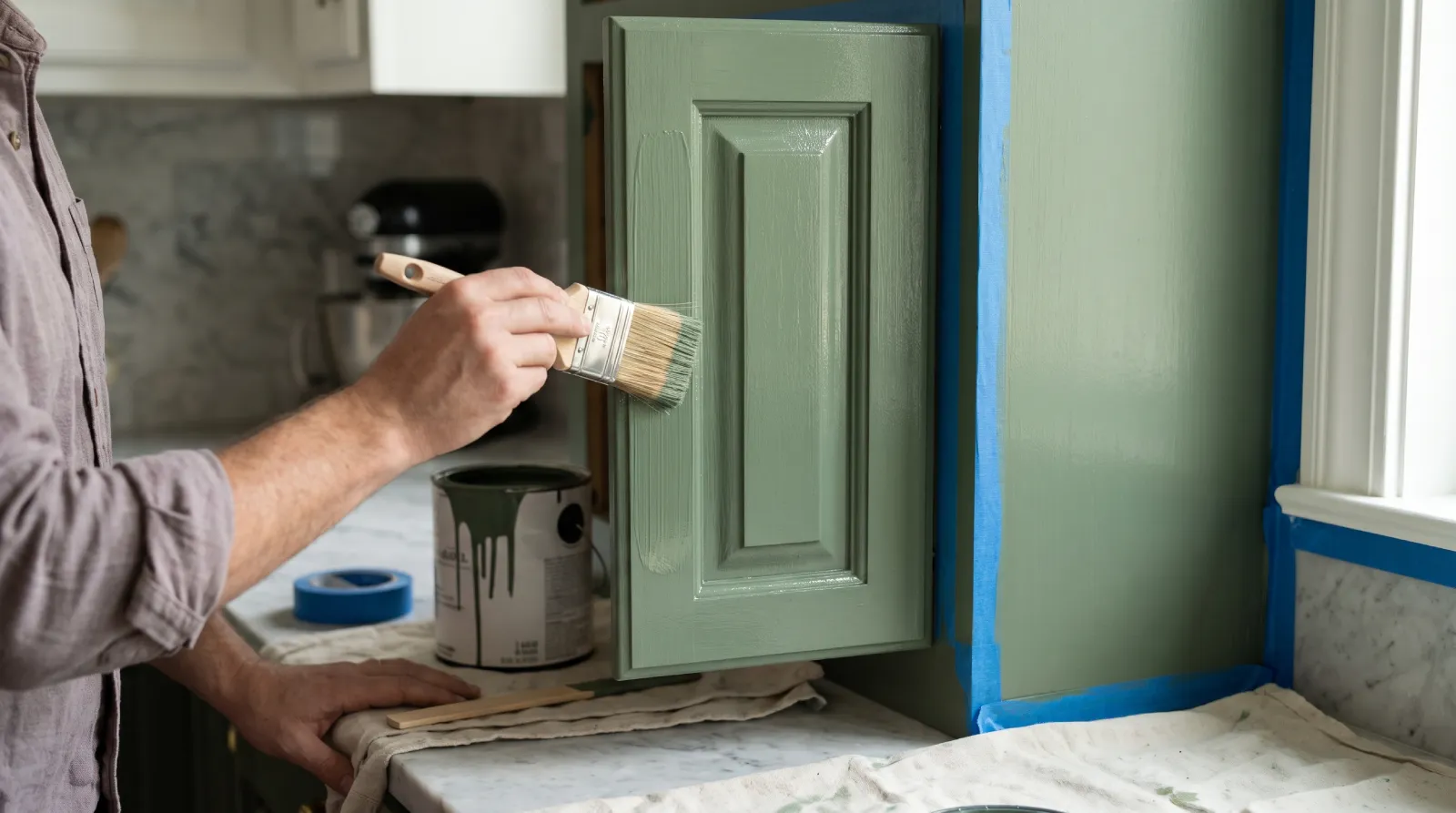
Handle Early Cleaning Differently From Routine Maintenance
Ask what to do if a splash or mark occurs during the initial care period. Written guidance should explain appropriate handling without encouraging an improvised cleaning experiment.
Avoid abrasive pads, strong cleaners, solvents, and unapproved polishes. A product labeled suitable for one household surface is not automatically appropriate for your cabinet coating.
Distinguish routine dusting or light care from scrubbing. The timing for normal cleaning may differ from the timing for careful handling.
Keep a small care note where the household can see it. Everyone using the kitchen should understand the same instructions. One person following the plan cannot protect the finish if another family member assumes the project is ready for ordinary deep cleaning.
Benjamin Moore’s guide to cleaning freshly painted walls and cabinets distinguishes fresh paint care from routine cleaning. Follow the instructions for the coating actually installed rather than borrowing a waiting period from another product.
Do Not Try to Prove Cure With a Scratch Test
A fingernail, coin, or tool can damage a finish and provide little reliable information about whether the system has developed its intended properties.
Likewise, pressing two surfaces together or applying an aggressive cleaner is not a useful home test. It can create the problem you are trying to avoid.
If something seems wrong, document the location, date, and action involved. Take a photograph and contact the refinisher for guidance.
Describe what happened without deciding the cause. A mark may relate to coating condition, handling, an accessory, contamination, or another issue requiring inspection. The painter can assess the product and project record more effectively when the original condition has not been altered by several attempted fixes.
Understand What a Touch-Up May Involve
A touch-up is not always a matter of applying extra paint from an unidentified can. Color, sheen, application method, preparation, and the condition of the existing finish can affect the appearance.
Ask who should assess an early mark and what information to preserve. Do not sand, polish, or apply another coating before discussing the issue.
Keep spare materials only as directed and label them clearly. Storage conditions and product age matter, and a container of paint is not a substitute for an approved repair method.
A clear responsibility agreement helps. Determine whether the refinisher handles initial follow-up, how concerns should be reported, and whether later damage from household use or another trade requires a separate assessment.
Use the Estimate to Discuss the Whole Timeline
A good planning conversation includes preparation, coating, handling, installation, and aftercare. It should also explain which parts of the kitchen may be unavailable at different stages.
Ask what must happen before the first day, which items the homeowner needs to remove, and how adjacent areas will be protected.
Then ask for the expected handover information. Product identity, care restrictions, and a contact route are practical parts of a cabinet-refinishing project.
Winner’s Circle Painting advertises cabinet painting and refinishing within its residential services and serves Nicholasville and Central Kentucky. Discussing the actual scope and finish system with the team is more useful than assuming a timeline based on a different kitchen or coating.
Review Winners Circle Painting’s process before discussing preparation, coating stages, and the product-specific return-to-use instructions for your cabinets.
Make Cabinet Paint Cure Time Part of Your Kitchen Plan
The best way to manage cabinet paint cure time is to connect product requirements with real household actions. Know when surfaces can be handled, when storage can be restored, and when routine cleaning can resume.
Leave room in the household schedule for those stages. A finish that looks complete can still need care, and rushing the final step may create avoidable marks or repair questions.
With written instructions and a coordinated sequence, you can plan a return to normal use that respects the actual coating rather than a generic promise. That makes the finished kitchen easier to live with and the aftercare process easier for everyone to follow.
Frequently Asked Questions
How long does cabinet paint take to cure?
There is no universal duration for every cabinet coating. The product system, application, and conditions determine the relevant instructions. Ask the refinisher for the actual product information and a practical return-to-use plan. Do not substitute another project’s timeline for the materials used in your kitchen.
Is dry-to-touch paint ready for regular cleaning?
Not necessarily. Dry-to-touch, handling, recoating, and normal service can be different milestones. Cleaning may involve pressure or chemicals that the surface is not ready to receive. Follow the coating-specific care instructions and ask the refinisher what to do if an early splash or mark occurs.
Can I use heat to speed up cabinet paint curing?
Do not use improvised heaters, hair dryers, or other methods without product-specific approval. Application and curing conditions need to follow the coating system’s requirements. If the household schedule is tight, discuss that before the project rather than trying to force a faster result after the finish is applied.
When can I put shelf liners back?
Confirm with the refinisher, especially when interior shelves were coated. Liners, adhesives, and other coverings can remain in contact with the finish and may not be suitable during the initial care period. The right answer depends on the surfaces, coating, liner material, and approved handling instructions.
What should I do if a painted cabinet door sticks?
Stop repeatedly forcing the contact and contact the refinisher for advice. Record the location, timing, and any recent handling or accessory changes. Avoid sanding or applying another product before assessment. The cause and appropriate remedy need to be evaluated against the actual finish and installation.
Plan Your Cabinet Refresh With Winner’s Circle Painting
If you are considering cabinet refinishing in Central Kentucky, contact Winner’s Circle Painting. Discuss the surfaces included, coating choices, kitchen access, and aftercare so the project schedule reflects how you will use the space.
